


Do you like watching plants grow? Do you find it rewarding? Then Victoria 2 could be just the experience you’re looking for.
“Victoria 2 is a grand strategy game played during the colonial era of the 19th century, where the player takes control of a country, guiding it through industrialisation, political reforms, military conquest and colonisation.” -www.victoria2.com
Sounds exciting! Guiding a nation through the tumultuous turn of the century and industrial revolution!
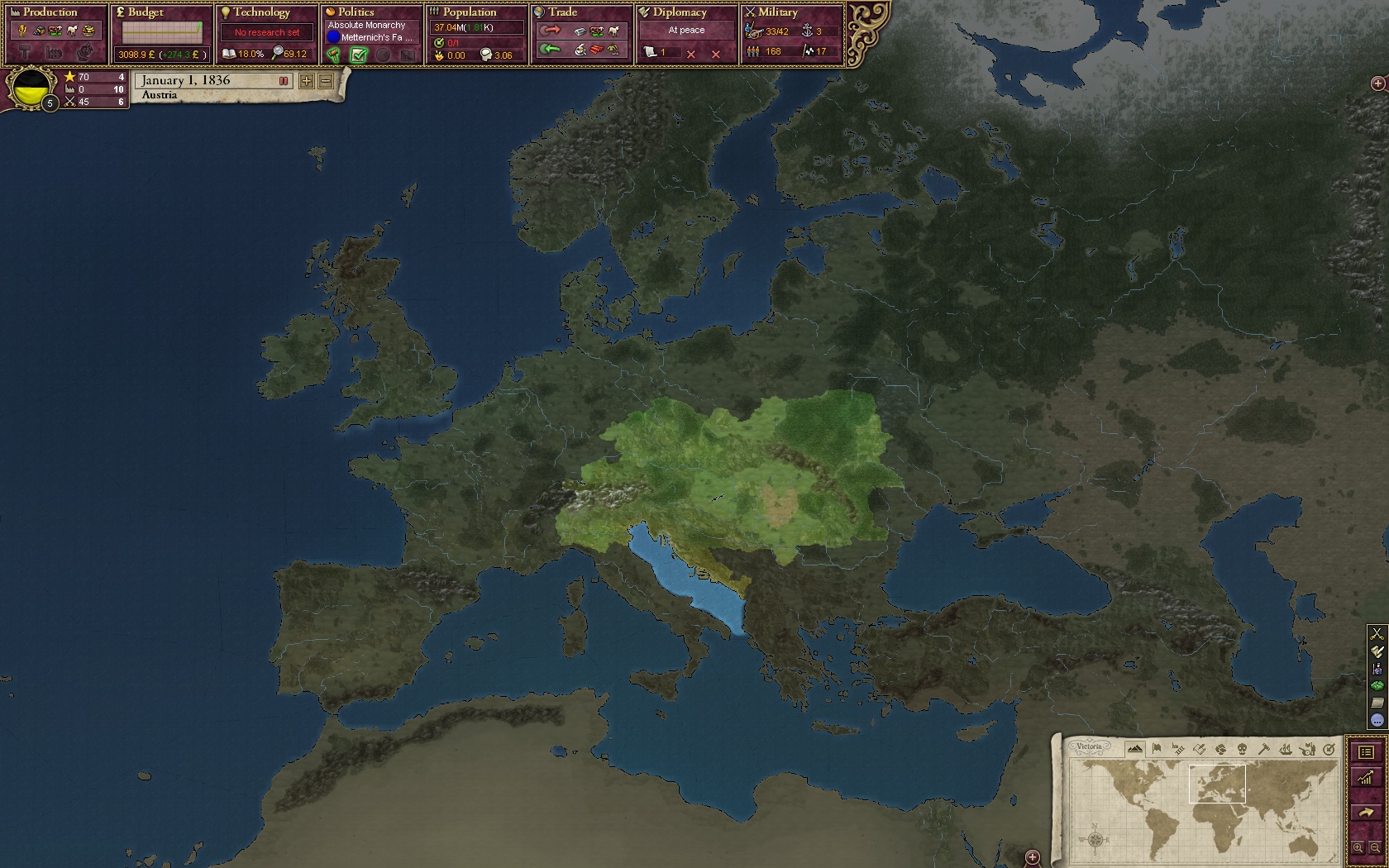
Maps!
Unfortunately, in my experience this was not the case. Despite box art depicting an epic battle, these play a very minor role in the game, and are unexciting when they do crop up. Player control is restricted to a few areas, and even in those areas it doesn’t feel as though these changes make a difference. Gameplay is slow even on the fastest setting, and circumstances will change within your nation with no discernible cause, making decisions seem rather arbitrary.
That said, the game is very complex, so if you’re in the mood for watching a nation or an empire grow and have an enthusiasm for graphs and sliders, this could be just the ticket. Population segments each have their own political inclinations and issues they consider important, both of which are affected by social strata and occupation. The cabinet’s political affiliations dictate which political reforms you can enact, and determine the ways a player can manage their nation. Player decisions in response to the random events which pop up affect the opinions of the people, which indirectly (eventually) influences the government of the nation.
The production and trade system is quite elaborate, but again, largely automated. Each territory produces a certain kind of resource, which cannot be changed by the player. Your whole island makes tobacco? Learn to love it, cause that’s all you get. You can, however, import the goods you need for the world market, which allows you to produce various goods for export in your factories (assuming you can build them, or convince your capitalists to do so). Goods produced don’t net the player any money directly, whether they are from the farms and mines or even from state-run factories. Instead, the owners of the facilities and employees get paid, and become more affluent and able to pay taxes and tariffs.
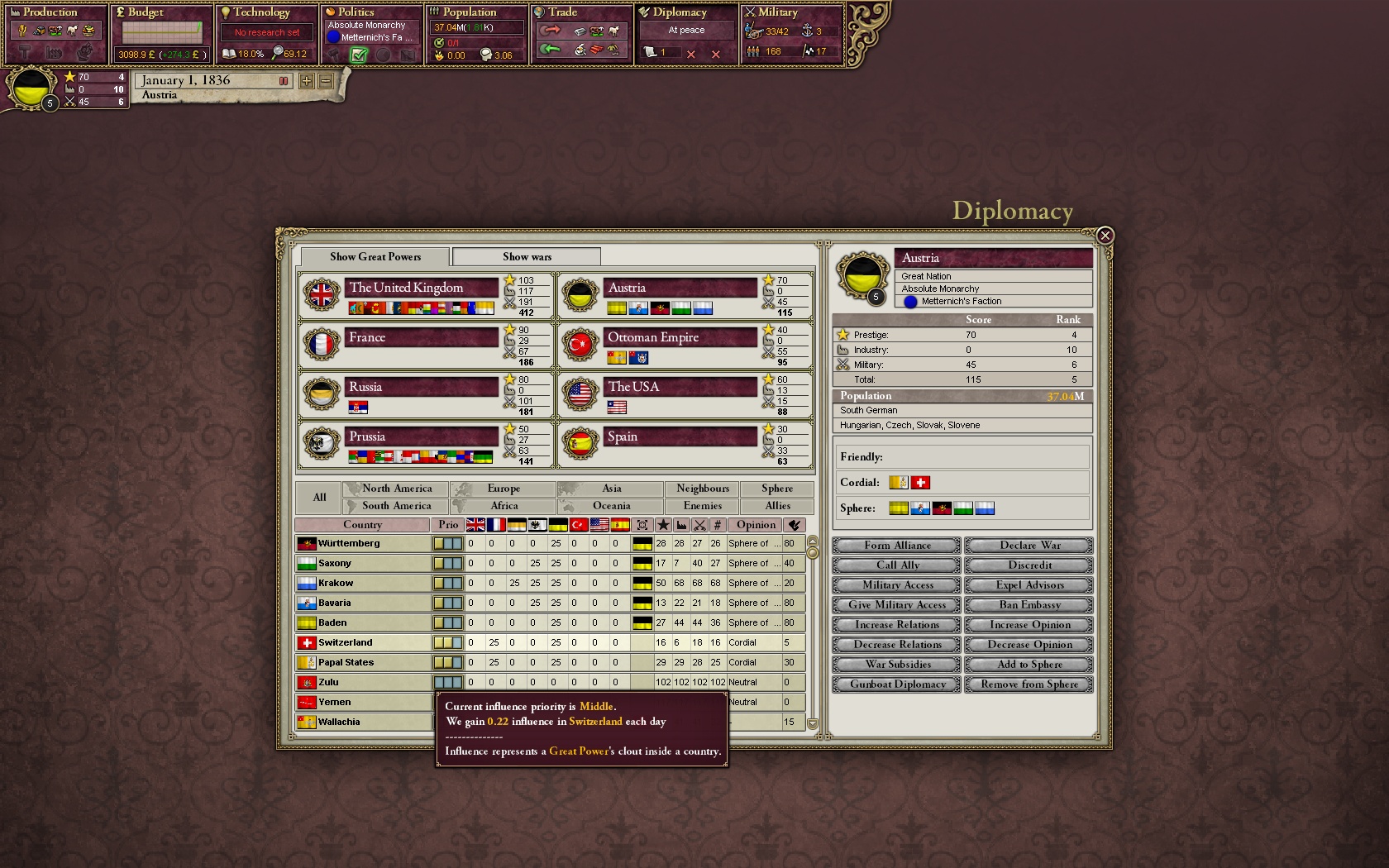
Charts!
Produced goods are sold first locally, and then to the world market. Success on the world market, unfortunately, is influenced by the murky prestige system, only referenced in passing most of the time. Frustratingly, I found that my factories were regularly unable to procure enough input goods to run, despite those goods being in low demand on the world market, and the factory being subsidized. While I’m sure there’s a reason for why this is the case, but none of the tooltips or tutorials provided any useful indication of why this might be, or even better, how to fix it. Worse, produced goods not sold each day are lost. There’s no way to store them for when the market recovers, or when another of your factories needs them in the future. (You have a stockpile, but it will attempt to immediately purchase enough goods to fill your maximum level from the world market that day, so it’s not very useful for this.)
Victoria 2 has a tutorial section available, which is divided into a multitude of tedious reading sections and some guided menu clicking. Even laboring through it, there are still many elements of the game that are poorly explained, or not explained at all. Tool tips within the game are somewhat helpful, but often times only raise further questions.
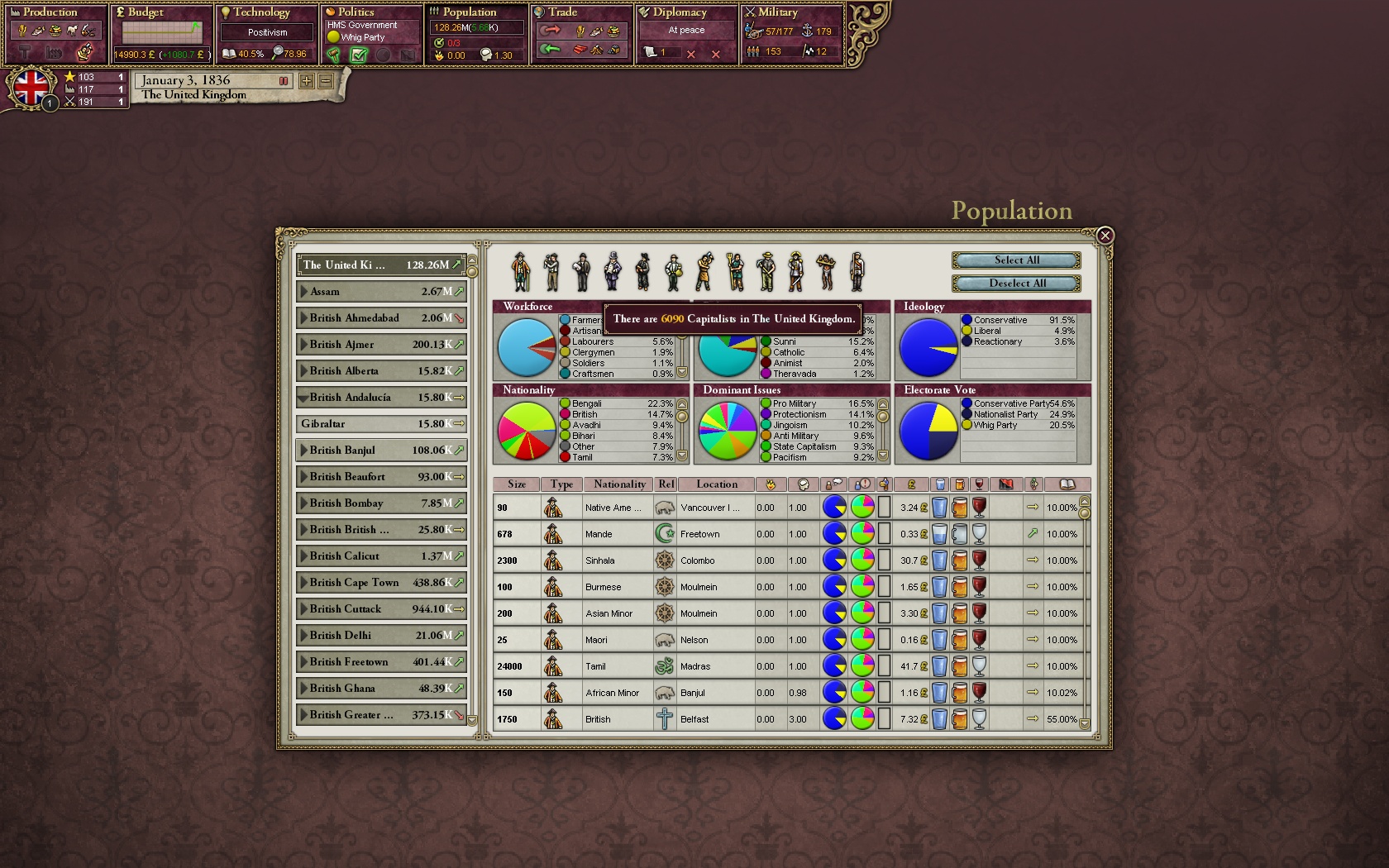
Graphs!
Another frustration I had was that some elements seemed scripted. When playing as Mexico, the United States comes to Texas’ aid in the war you start out in the middle of, and kicks your ass. When you play as Texas, the United States watches as Mexico stamps all over your country. None of the diplomacy options available would convince them to help. Many research elements cannot be researched before a specific date either.
I did not find this game particularly fun or rewarding. For the most part, it felt like watching the neighbour’s grass grow. (You can’t water the grass yourself, but you can leave the hose out and hope he does!) If you’re in the mood for a slow-paced economic simulator, however, definitely give this game a try.




This is like, for people that just like to be organized…. So, not for me.